
Lowndes County Criminal Court Cases
Lowndes Superior Court is the county's felony trial court. Its file may begin with an indictment or accusation and continue through arraignment, motions, plea or trial, judgment, sentence, probation terms, and later post-judgment filings. Lowndes State Court handles county misdemeanors and traffic offenses within its jurisdiction. Both sets of trial-court records route through the Clerk of Superior and State Courts. The official Superior Court page and official State Court page confirm the local division of work.
Magistrate Court has an earlier role. Judges issue many warrants, hold first appearances, and address bond or preliminary matters, but the final felony prosecution moves to Superior Court. Municipal courts keep city ordinance, citation, and authorized state-law matters. Juvenile Court files are generally confidential. A search confined to one Lowndes County court can therefore miss a valid record held by another clerk.
The county's description of State Court and its misdemeanor role provides useful context for that split.

This source image helps a reader confirm that a county misdemeanor belongs at the State Court counter rather than the felony division.
Route Lowndes County Case Records
The issuing agency and charging level point toward the likely custodian. A city citation may never appear in the county trial-court portal. Conversely, a felony that began with a city police arrest can later appear in Superior Court. Use the following map before assuming that no file exists.
| Court | Lowndes County role | Best starting point |
|---|---|---|
| Superior Court | Felony indictments, trials, pleas, sentences, and many later motions | Clerk of Superior and State Courts |
| State Court | County misdemeanors and county traffic prosecutions | State Court page and judicial clerk |
| Magistrate Court | Warrants, first appearances, bond, and preliminary proceedings | County Magistrate Court |
| Municipal Court | City ordinances, citations, and limited state-law offenses | The issuing city's court |
The Lowndes Magistrate Court page is the official starting point for its limited stage of a criminal case.
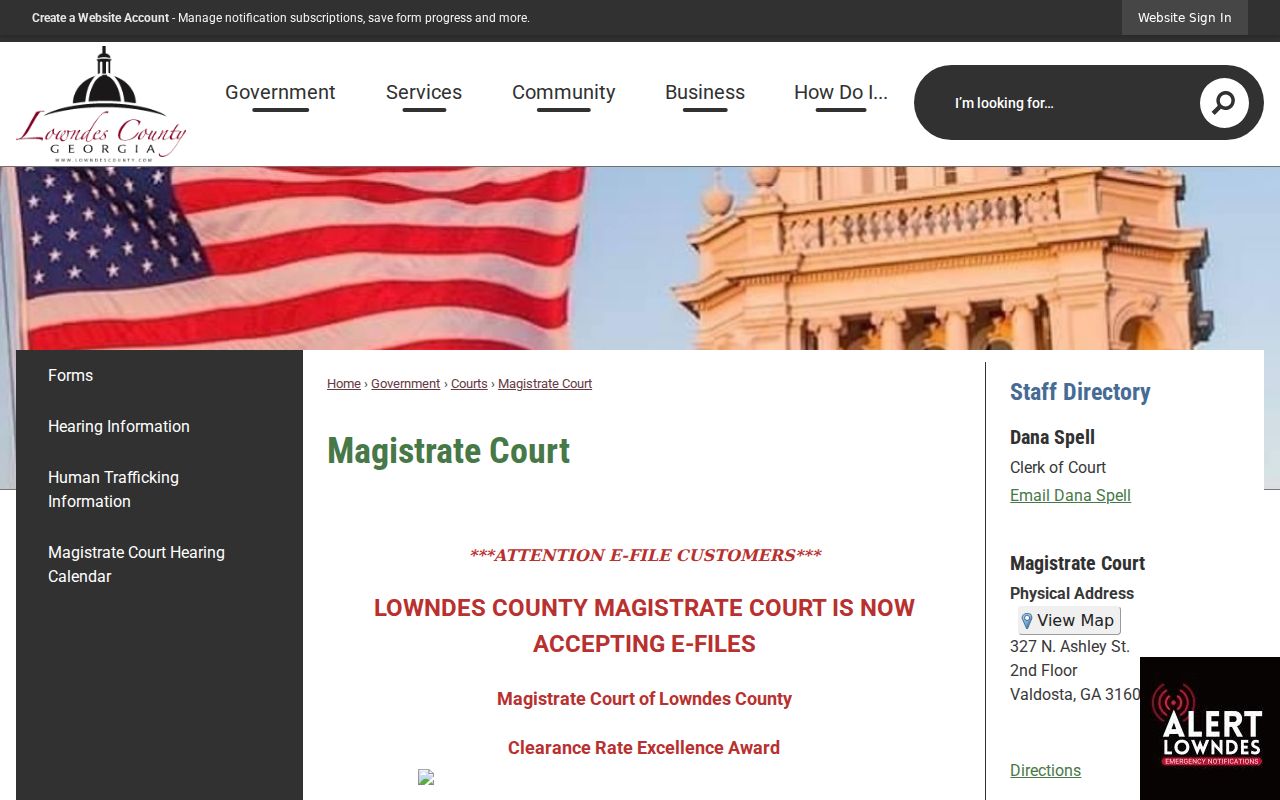
Its placement in the record chain explains why a warrant or first-appearance entry may be separate from the later trial docket.
Searching Lowndes County Case Records
The Lowndes County Odyssey Portal is the direct local starting point for real-time case, party, calendar, register-of-actions, judgment, and order information. The portal's live interface was access-limited during research, so exact required labels must be checked on the current screen. Search by case number when possible. A party-name search should be narrowed by court and year, then checked against known details.
- Select the court division that matches the alleged offense.
- Enter a case number, or use the party's full name.
- Narrow broad results by filing year and case category.
- Open the register of actions and read every count separately.
- Ask the clerk for an image, copy, or certified judgment when the portal is incomplete.
| Search item | Format | Required | Use |
|---|---|---|---|
| Case number | Text | No | Most precise identifier when known |
| Party name | Text | Alternative | Use full legal name and test aliases |
| Court | Division choice | Often useful | Separates Superior, State, and lower-court records |
| Filing year | Year filter | No | Reduces common-name results |
| Case category | Filter | No | Keeps civil matters out of a criminal search |
The portal view is a lead, not always the full case file. Preserve the case number and verify the outcome against the judgment or disposition.
Lowndes County Court Portal Choices
Lowndes Odyssey offers the most direct local index. re:SearchGA provides account-based, multi-jurisdiction access, while PeachCourt serves court-designated electronic filing and document access. An index hit does not ensure that every filing image is available. Account rules and document charges can also differ from the free docket view.
The official Odyssey interface is represented by its Lowndes court portal source.
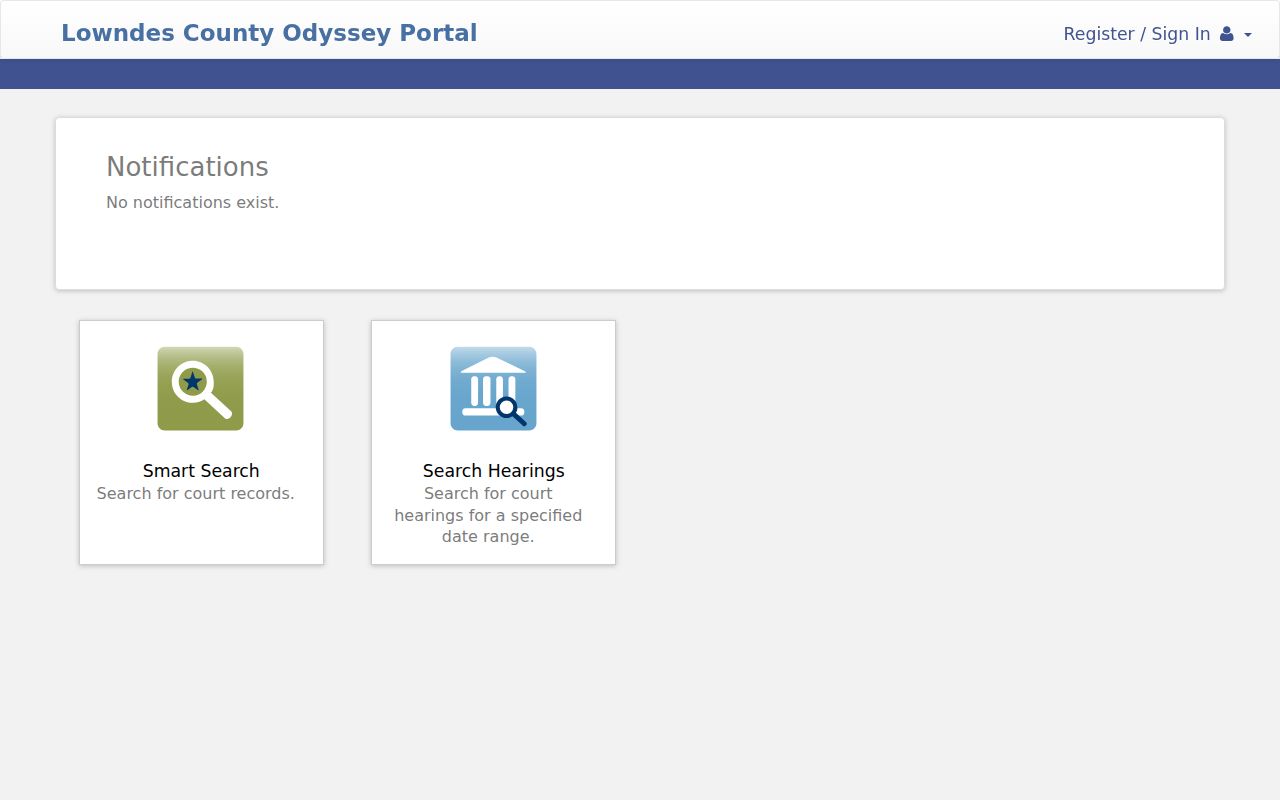
Use its register entries to identify a filing, then ask the clerk about any document that is absent or not downloadable.
Inside a Lowndes County Case File
A Lowndes County court file is organized around a case number. It differs from the fingerprint-linked GCIC arrest cycle and the jail's booking number. The docket can display separate results for separate counts, so a single status label should never be applied to the whole case without checking the entries and final orders.
| Case number and court | Identifies the file and the Lowndes County division that owns it. |
|---|---|
| Charging document | Shows an accusation or indictment and the statutes charged. |
| Docket entries | Lists filed motions, notices, orders, and procedural events. |
| Hearing dates | Shows scheduled or completed arraignments, motions, and trials. |
| Disposition and judgment | Records the outcome for each count, including dismissal, acquittal, plea, or conviction. |
| Sentence and conditions | May list confinement, probation, fines, restitution, and court conditions. |
Public views generally omit full Social Security numbers and protected identifiers. Victim data and juvenile material may be withheld. The research inventory is field-level because no private defendant record was retained.
Read Lowndes County Case Outcomes
“Disposed” means the court completed a procedural outcome. It does not automatically mean convicted. One count may be dismissed while another ends in a plea, and an indictment can include counts that later receive different judgments. The safest method is to read each charge line and obtain the signed judgment when the result matters.
- Accusation
- A prosecutor's formal charging paper, often used when a grand-jury indictment is not required or is waived.
- Indictment
- A grand jury's formal felony charge. An approved indictment is called a true bill.
- Nolle prosequi
- The prosecutor's filed decision not to continue a charge at that time.
- Dead docket
- A Georgia procedure that pauses prosecution without a final acquittal.
- Disposition
- The recorded outcome assigned to a specific charge.
A portal status can summarize activity, but the order controls. This distinction also matters when comparing a booking charge to the later court judgment.
Note: A booking allegation can change before filing, so match the Lowndes County arrest to the prosecutor's final counts.
How a Criminal Case Moves
A felony file may start after an arrest and Magistrate Court review, but Superior Court becomes the trial record custodian once felony charges are filed. A misdemeanor generally moves into State Court, while a city matter may stay municipal. Timing varies with the case, and the research supports no universal Lowndes County deadline for every stage.
Case flow: Charges Filed → Arraignment → Pretrial → Plea or Trial → Disposition → Sentencing
Motions, amended counts, continuances, and bond events can appear between those points. The register of actions gives the sequence, while the linked document gives the substance.
Older Lowndes County Court Files
When Odyssey finds a case but shows no image, keep the case number and contact the Clerk of Superior and State Courts. Ask whether the file is archived, how long retrieval may take, and what current per-page or certification charge applies. Research found no single published county fee that safely covers every old file and certified record, so request an estimate.
The Lowndes Clerk's official site is the right channel for trial-court pleadings and judgments. The Board of Commissioners' open-records contact does not replace the judicial clerk. A screen print may support personal research, but a certified copy carries the clerk's authentication when formal proof is needed.
Lowndes County Felony Court Access
The felony starting point is documented on the Lowndes Superior Court source page.
This official source supports the court-routing rule: felony judgments and sentences belong with Superior Court, not the jail roster or municipal clerk.
If a felony search produces only a booking entry, wait for filing or ask the clerk by name and approximate arrest date. A missing portal result is not proof that no prosecution exists.
Case Record Access & Restrictions
The Georgia Open Records Act favors access to public agency records, but court and law-enforcement files can contain protected material. Full identifiers, juvenile records, victim-sensitive data, medical facts, confidential sources, and defined investigative information may be redacted or withheld. An agency should separate exempt material when the rest can be released.
Georgia record restriction under O.C.G.A. § 35-3-37 limits eligible arrest-cycle dissemination. Court sealing is a separate court step. A restricted GCIC cycle does not by itself prove that every Lowndes County docket image has been sealed. If a case is absent, ask the clerk whether access is restricted, the file is archived, or the portal simply lacks the image.
For precise proof, identify the court, case number, and count, then request the relevant judgment. The broader Lowndes County criminal history overview explains how that court result connects to GCIC and other record custodians.
Online access can also differ from counter access. A public index may expose the event text while withholding the scanned filing, or it may omit a record that staff can retrieve from storage. Give the Lowndes County clerk a narrow request that names the division, approximate year, party, and case number. Ask whether inspection is available before ordering copies. When identity is uncertain, compare court and case identifiers rather than relying on a shared name. A certified disposition is more reliable than a search-result summary because it authenticates the court's final entry.